Factory Planning Guide: Build Your Industrial Facility Right

Whether you are a manufacturer setting up your first production facility or an established business looking to expand operations, factory planning is one of the most consequential decisions you will ever make. Get it right, and you lay the foundation for decades of efficient, scalable production. Get it wrong, and you risk costly redesigns, operational bottlenecks, and compliance headaches that slow your business down.
In Malaysia’s rapidly industrialising landscape from the manufacturing corridors of Shah Alam and Klang to the industrial parks of Penang and Johor the demand for well-planned factory spaces has never been higher. Yet many businesses still treat a factory as “just a building,” underestimating the deep integration required between structure, workflow, and long-term operational goals.
This guide walks you through the key principles of factory planning: from site selection and spatial layout to regulatory compliance and sustainability. If you are currently exploring your options, it helps to first understand the fundamentals of what a purpose-built industrial facility actually involves before making any commitments.
What Is Factory Planning and Why Does It Matter?
Factory planning is the strategic process of designing, organising, and coordinating the physical space, systems, and infrastructure of a manufacturing or industrial facility before a single brick is laid. It sits at the intersection of architecture, engineering, logistics, and operations management.
Unlike planning a commercial office or retail space, factory planning demands a deep understanding of production workflows, material handling, equipment specifications, safety regulations, and future scalability. Every decision from the orientation of the building on the site to the width of internal corridors directly affects how efficiently your teams and machines can operate.
In the Malaysian context, poor factory planning has historically led to:
- Operational inefficiencies such as cross-traffic between raw material intake and finished goods dispatch
- Compliance failures under DOSH (Department of Occupational Safety and Health) or local authority requirements
- Costly retrofits when a business grows beyond what the original layout can accommodate
- Environmental issues including inadequate drainage, waste management, or ventilation that fail DOE standards
Good factory planning, by contrast, creates a facility that grows with your business, keeps workers safe, and supports lean, efficient production from day one.
Key Stages in the Factory Planning Process
Effective factory planning is not a single event it is a phased process that typically unfolds across several months and involves multiple disciplines working in coordination.
1. Needs Assessment and Feasibility
Before any design work begins, a thorough needs assessment should be conducted. This involves documenting your production processes, equipment requirements, staffing numbers, raw material storage needs, and projected growth over 5 to 10 years. A feasibility study will then test whether a proposed site or building footprint can realistically accommodate those needs.
2. Site Selection and Zoning
In Malaysia, factories must be developed within designated industrial zones as defined by local development plans (Rancangan Tempatan). Selecting the right site involves evaluating proximity to suppliers and customers, infrastructure access (roads, utilities, port), labour availability, and land cost. Critically, the site must be appropriately gazetted for industrial use a step that is sometimes overlooked by businesses buying cheaper land in mixed or agricultural zones.
3. Spatial Layout and Flow Design
This is where factory building design truly comes into its own. The layout must map out:
- Production zones (wet, dry, clean, controlled environments)
- Material flow paths from receiving dock to production line to dispatch
- Ancillary spaces including quality control rooms, maintenance workshops, and rest areas
- Utilities infrastructure such as compressed air lines, electrical distribution, drainage, and fire suppression systems
A good layout minimises unnecessary movement, reduces the risk of cross-contamination, and allows for future line expansion without disrupting active production.
4. Structural and Building Services Design
Once the layout is confirmed, structural engineers and M&E consultants translate the spatial plan into a buildable design. Key considerations here include floor load capacities (especially for heavy machinery), clear height requirements for overhead cranes or racking systems, column grid spacing, and roof design for natural lighting and ventilation.
5. Regulatory Approvals
In Malaysia, factory projects require approvals from multiple authorities including local councils (PBT), the Fire and Rescue Department (BOMBA), the Department of Environment (JAS), and DOSH. Experienced practitioners particularly those working in the design and build space for industrial facilities are well-versed in coordinating these submissions efficiently to avoid project delays.
Factory Building Design: Balancing Function and Future-Proofing
One of the most persistent misconceptions in factory planning is that functionality and future-proofing are competing priorities. In reality, the best designs achieve both simultaneously by building in flexibility from the outset.
Structural flexibility means designing the building’s column grid, floor slab, and roof loading to accommodate uses beyond the immediate brief. A factory built for light assembly today might need to house heavier stamping presses in five years. If the structure cannot support the additional load, the cost of modification can dwarf the savings made during initial construction.
MEP (Mechanical, Electrical, Plumbing) scalability is equally important. Running additional power feeds or extending compressed air lines is straightforward when distribution infrastructure was designed with headroom. The same goes for HVAC systems, especially in Malaysia’s tropical climate where humidity and heat management directly affect both product quality and worker welfare.
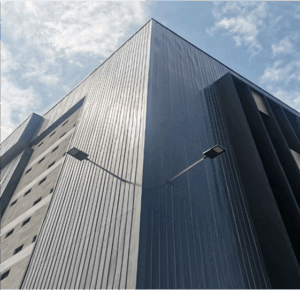
Facade and envelope design in factory planning also deserves more attention than it typically receives. A well-designed industrial envelope using the right cladding materials, orientation, and shading devices can dramatically reduce solar heat gain, lower energy consumption, and create a more comfortable internal environment. This is particularly relevant in Malaysia’s west coast industrial corridors where peak afternoon temperatures can push internal heat loads to uncomfortable extremes.
Beyond performance, thoughtful factory planning also supports corporate identity. Modern Malaysian manufacturers increasingly understand that a well-presented factory communicates professionalism to clients, investors, and talent.
Factory Design Malaysia: Navigating the Local Landscape
The Malaysian industrial property market has matured considerably over the past two decades. The rise of export-oriented manufacturing, the expansion of the EV supply chain, and growing demand from logistics and e-commerce operators have all driven a new wave of factory planning across the country.
For businesses pursuing factory planning in Malaysia, several local factors deserve specific attention:
Industrial park infrastructure varies significantly. A plot within an established, well-serviced industrial park (such as those in Shah Alam’s Sections 23 and 26, or Senai Industrial Park in Johor) will come with reliable utilities, road infrastructure, and in some cases, shared facilities. Greenfield sites outside these parks may offer lower land costs but carry higher infrastructure development costs.
Bumiputera ownership requirements and Halal certification add layers of compliance that affect both site selection and internal design. Halal manufacturing facilities, for instance, require specific material flow segregation, dedicated storage, and sanitation provisions that must be incorporated at the planning stage.
Environmental compliance under the Environmental Quality Act 1974 requires that industrial effluent, noise, air quality, and solid waste management be addressed in factory planning. For industries with heavier environmental footprints chemicals, food processing, rubber goods this often necessitates dedicated treatment infrastructure.
Working with an experienced design and build partner who understands the full scope of factory design in Malaysia can help businesses avoid costly surprises during the approval and construction phase.
Sustainability in Factory Planning: The New Baseline
Sustainability is no longer a premium add-on in factory planning it is increasingly a business necessity. Rising energy costs, tightening ESG reporting requirements, and growing pressure from multinational clients who benchmark their supply chains against carbon targets are all pushing Malaysian manufacturers to build greener facilities.
Sustainable factory planning typically encompasses:
- Passive design strategies building orientation, roof overhangs, high-performance insulation, and strategic placement of windows and skylights to maximise daylight while minimising solar heat gain
- Renewable energy integration rooftop solar PV systems are now cost-effective across most of Malaysia, and many factories can offset a significant portion of their electricity consumption through well-designed solar installations
- Rainwater harvesting and water recycling particularly relevant for manufacturing processes with high water consumption
- Waste heat recovery common in food processing and chemical manufacturing, where process waste heat can be captured and reused for space heating or hot water
- Green building certification GBI (Green Building Index) industrial certification is increasingly sought by foreign investors and MNC clients as evidence of sustainable operations
Incorporating these elements at the planning stage is dramatically more cost-effective than retrofitting them later. This is one of the strongest arguments for investing properly in factory planning from the outset rather than cutting corners on the design process.
Conclusion
Factory planning is one of the highest-leverage activities in the lifecycle of a manufacturing business. The decisions made in the planning phase about layout, structure, MEP systems, compliance, and sustainability will shape how efficiently and profitably your facility operates for years, sometimes decades, to come.
In Malaysia’s competitive industrial landscape, where land costs are rising, regulatory scrutiny is increasing, and client expectations are shifting, the businesses that plan carefully will be the ones that build with confidence. A well-executed factory is not just a building it is a strategic asset.
If you are at the early stages of exploring a factory project, we encourage you to start with a solid understanding of the full scope of what is involved. Take the time to explore our comprehensive overview of industrial design and build delivery it will give you the context you need to ask the right questions and make informed decisions.
When you are ready to take the next step, we would love to help. Learn more about our team and our approach and let’s start a conversation about what your factory could look like.


Read More Blogs