Warehouse Automation: Types, Benefits and How It Works
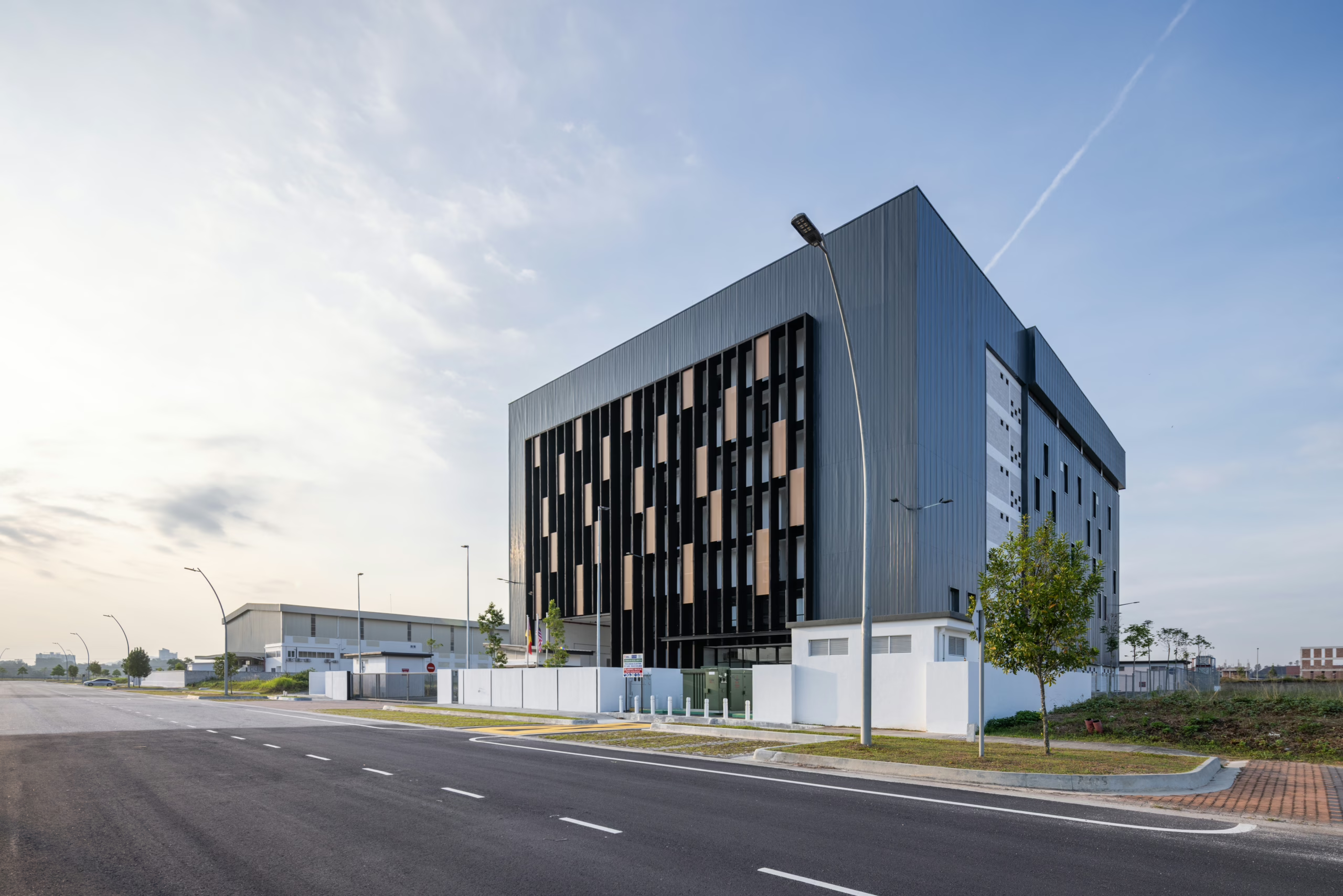
The way goods are stored, moved, and distributed is undergoing a quiet revolution and at the heart of it is warehouse automation. As Malaysia’s logistics and manufacturing sectors continue to expand, driven by the growth of e-commerce, export-oriented industries, and free trade zones in Selangor, Johor, and Penang, the pressure on warehouses to perform faster and smarter has never been greater.
But here’s the thing: automation doesn’t just happen in isolation. It begins with thoughtful, purposeful design. Before any robotic arm or conveyor belt is installed, decisions about ceiling height, structural load, aisle width, and power infrastructure must already be baked into the building itself.
In this post, we’ll break down what warehouse automation is, how it works, the different types available, and the real benefits it delivers particularly in the Malaysian industrial context. If you’re planning a new facility or upgrading an existing one, understanding how automation connects to architectural decisions is essential. You can start by exploring this comprehensive guide to industrial facility planning in Malaysia as a foundation.
What Is Warehouse Automation?
At its core, warehouse automation refers to the use of technology hardware, software, or both to perform tasks that would traditionally require human labour. This can range from relatively simple solutions like barcode scanning and conveyor systems, all the way to fully autonomous robots that pick, sort, and pack orders without any human involvement.
Warehouse automation is not a single product or system. It is an ecosystem of interconnected tools and technologies working in concert within a carefully designed physical space. The goal is to increase throughput, reduce errors, lower operational costs, and improve worker safety.
In Malaysia, the term is increasingly prominent in conversations across sectors like logistics, automotive parts manufacturing, food and beverage distribution, and pharmaceutical storage. As labour costs rise and supply chain expectations tighten, both local and multinational companies are investing heavily in automated warehouse capabilities which in turn drives demand for buildings that are built to support them.
How Does Warehouse Automation Work?
Understanding how warehouse automation works requires looking at it from two angles: the technological layer and the physical layer.
The Technological Layer
Automation systems rely on a combination of:
- Warehouse Management Systems (WMS): Software platforms that track inventory in real time, manage order fulfilment, and direct automated equipment to perform specific tasks.
- Sensors and IoT Devices: These capture data about location, temperature, weight, and movement throughout the facility.
- Control Software and AI: Advanced systems use machine learning to predict demand, optimise pick paths, and schedule maintenance.
The Physical Layer
This is where architecture and engineering become critical. Automated systems require specific physical conditions to function properly:
- High clear heights: Automated storage and retrieval systems (AS/RS) often require ceiling clearances of 12 to 30 metres or more.
- Flat, reinforced concrete floors: Autonomous mobile robots (AMRs) need level surfaces to navigate accurately.
- Wider electrical and data infrastructure: Automated systems draw significant power and require robust network connectivity throughout the building.
- Flexible column grids: A wider column spacing reduces obstruction for racking and robotic movement.
This is precisely why warehouse automation must be considered during the design stage, not retrofitted afterwards. Working with an experienced industrial design architect in Malaysia ensures these technical requirements are embedded into the building from the very beginning.
Types of Warehouse Automation
Warehouse automation is not one-size-fits-all. Different businesses will implement different types of automation depending on their scale, product type, budget, and operational complexity. Here is an overview of the most common systems currently being adopted in Malaysia and across the region.
1. Conveyor and Sorting Systems
One of the most established forms of automation, conveyor systems move goods along fixed paths through a facility. Sorting systems use sensors and diverters to route items to the correct destination a packing station, loading bay, or storage zone.
These are widely used in parcel delivery hubs and large distribution centres, including those operated by major e-commerce players with fulfilment centres in the Klang Valley.
2. Automated Storage and Retrieval Systems (AS/RS)
AS/RS systems use computer-controlled equipment typically cranes or shuttles to store and retrieve pallets or totes from high-density racking systems. They make efficient use of vertical space, which is especially valuable in urban industrial zones where land costs are high.
A well-designed AS/RS installation can dramatically reduce the floor area needed compared to conventional racking, while processing orders faster and with far fewer picking errors.
3. Autonomous Mobile Robots (AMRs) and Automated Guided Vehicles (AGVs)
AMRs navigate independently using cameras and sensors, adapting dynamically to their environment. AGVs follow fixed paths defined by magnetic strips or embedded wires.
Both are increasingly used in Malaysian manufacturing and fulfilment facilities to transport goods between zones, reducing reliance on manual forklifts and improving safety on the warehouse floor.
4. Robotic Picking and Packing
Perhaps the most visually striking form of automation, robotic picking systems use robotic arms equipped with suction cups or grippers to select individual items from storage and place them into cartons or totes. These systems are advancing rapidly, with modern robots able to handle an expanding range of product shapes and sizes.
5. Warehouse Management Systems (WMS) and Digital Automation
Not all automation is physical. A powerful WMS is the operational brain behind any automated warehouse, coordinating all systems, tracking inventory in real time, and generating actionable insights. Even a facility with minimal physical automation can achieve significant efficiency gains by implementing a robust WMS.
Benefits of Warehouse Automation in Malaysia
The business case for warehouse automation is compelling, particularly in the Malaysian industrial landscape where logistical demands are growing and skilled labour availability is increasingly competitive.
Increased Operational Efficiency
Automated systems can operate continuously without fatigue, processing orders at speeds that human teams simply cannot match during peak periods. For companies managing Hari Raya or year-end sales surges, this consistency is invaluable.
Reduced Human Error
Manual picking errors lead to costly returns, unhappy customers, and inventory discrepancies. Automation guided by accurate WMS data dramatically reduces these mistakes. Some facilities report error rates dropping by over 90% after implementing guided picking or robotic fulfilment.
Improved Worker Safety
In Malaysia, occupational safety and health (OSH) standards continue to evolve. Automating high-risk tasks such as heavy lifting, repetitive motion work, and forklift operations reduces workplace injury rates and helps companies maintain compliance with DOSH requirements.
Better Space Utilisation
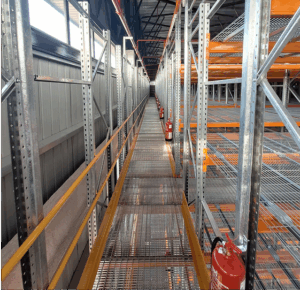
Automated systems, particularly AS/RS and high-density mobile racking, allow companies to store significantly more within the same footprint. Given the rising cost of industrial land especially around Shah Alam, Subang, and Bukit Raja this spatial efficiency has a direct impact on profitability.
Scalability and Future-Readiness
Automation infrastructure, when designed correctly from the outset, can be scaled modularly. A company may begin with a basic conveyor system and WMS, then progressively introduce robots, AS/RS, or AI-driven analytics as the business grows.
This scalability is one of the strongest arguments for involving a qualified industrial design architect early in the project ensuring the building structure, power systems, and layout can accommodate future automation layers without expensive structural modifications later.
Warehouse Design and Automation Success
It bears repeating: warehouse automation and warehouse design are inseparable. The most sophisticated robotic system will underperform or fail entirely if the building it operates in was not designed to support it.
This is a lesson that many warehouse operators learn the hard way. Retrofitting a conventional warehouse to accommodate automation can cost far more than designing for it from the start. Column grids that are too tight, floor flatness tolerances that are insufficient, or electrical infrastructure that is undersized can all derail an automation project.
In Malaysia, where many industrial properties are built speculatively to attract tenants across a range of uses, the burden often falls on the occupier to assess whether a building is truly automation ready or to commission a purpose-built facility from the ground up.
For anyone at that stage of planning, this detailed resource on warehouse and industrial facility design offers valuable guidance on how architectural decisions directly influence operational capability.
Conclusion
Warehouse automation is no longer a vision of the future it is happening right now, across Malaysia and throughout the global supply chain. From conveyor systems in Selangor distribution hubs to robotic picking lines in Johor Bahru fulfilment centres, the shift toward automated operations is accelerating.
Understanding what warehouse automation is, how it works, and which types suit your operation is the first step. But equally important is ensuring that your facility is designed from the foundation up to support these systems. The structural, spatial, and technical demands of automation are specific, and meeting them requires expertise that spans both industrial technology and architectural design.
The best outcomes come from integrating both working with professionals who understand not just how a warehouse should look, but how it needs to function under real operational conditions.
Ready to take the next step?
Explore how thoughtful warehouse design in Malaysia supports automation and long-term operational efficiency: https://notarchitecturesdnbhd.com/guide-for-warehouse-design-malaysia/
To speak directly with our team about your upcoming warehouse or industrial project, visit: https://notarchitecturesdnbhd.com/contact/


Read More Blogs