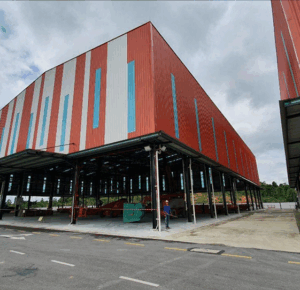
Industrial Shed Design: Structure, Layout and Performance

An industrial shed might look straightforward from the outside four walls, a roof, and a rolling shutter door. But underneath that apparent simplicity lies a remarkably complex set of decisions that will determine how well the building serves your business for the next 20 to 30 years.
In Malaysia, where manufacturing, logistics, and light industrial activity continue to drive economic growth across Selangor, Johor, and Penang, demand for well-designed industrial shed structures has surged. Yet many businesses still approach these projects without a clear framework, often discovering mid-project or worse, post-occupancy that the shed cannot accommodate their equipment, workflow, or compliance requirements.
This guide covers the core principles behind thoughtful industrial shed design from structural systems and material choices to layout planning, regulatory compliance, and long-term adaptability. Before diving in, it is worth understanding the broader delivery model that frames most industrial construction projects in Malaysia today how design and build contracts work for factory and industrial facilities is a useful starting point.
Understand Your Operation First
The single most common mistake in industrial shed design is starting with the structure rather than the operation. Before any drawings are produced, the design brief should answer a fundamental question: what does this shed actually need to do?
This sounds obvious, but in practice, it is frequently skipped. Business owners focus on cost per square foot and lead time, while contractors focus on structural feasibility. The operational layer how materials move, where people work, what equipment needs to be housed, how the shed interacts with external logistics gets addressed too late or not at all.
A well-prepared brief for industrial shed design should capture:
- Primary use category manufacturing, warehousing, logistics, cold storage, workshop, or a hybrid of these
- Equipment inventory dimensions, weight, vibration characteristics, and utility requirements for all major plant and machinery
- Material flow how raw materials enter, how finished goods or goods-in-transit exit, and how these flows interact (or must be kept separate)
- Staffing and welfare requirements number of workers per shift, location of rest areas, toilets, and prayer rooms per Malaysian labour regulations
- Future growth scenarios likely changes to production capacity, product mix, or tenancy over a 10-year horizon
Getting these answers on paper before engaging structural engineers or contractors will save significant time and money downstream. It also gives your design team the clarity they need to make informed decisions about structural spans, clear heights, door positions, and utility infrastructure.
Structural Systems: Steel Portal Frame
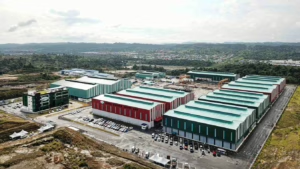
The structural workhorse of industrial shed design across Malaysia and Southeast Asia is the steel portal frame and for good reason. Portal frame construction offers wide clear spans, fast erection times, and exceptional adaptability for a range of industrial uses.
A standard portal frame shed consists of steel columns and rafters connected by moment-resisting joints at the eaves and apex. This rigid frame arrangement allows large floor areas to be covered without internal columns, giving operators the open floor space they need to arrange production lines, racking systems, or vehicle movements without structural obstructions.
Within the portal frame family, there are several variants worth understanding:
- Single-span portal frames are the most cost-efficient option for sheds up to approximately 30 to 40 metres in width. They are the default choice for light manufacturing, small-scale warehousing, and workshop applications.
- Multi-span portal frames essentially two or more single-span frames sharing interior columns allow very large floor areas to be covered economically. They are common in large distribution centres and automotive manufacturing facilities, though the interior columns require careful positioning to avoid obstructing operations.
- Crane portal frames are portal frames specifically engineered to support overhead travelling cranes. The columns are heavier and the connections are designed to handle the dynamic loads imposed by crane movement. These are standard in heavy engineering workshops, fabrication yards, and any facility handling large or heavy components.
In the context of factory building design, the choice of structural system has knock-on effects across the entire project influencing foundation design, cladding selection, services coordination, and construction programme. This is one reason why early structural input is so valuable in the design process.
For businesses working through a design and build procurement route for their industrial project, the structural engineer and architect typically work as an integrated team, which helps surface these interdependencies early rather than discovering them during construction.
Cladding, Roofing and Thermal Performance
If there is one aspect of industrial shed design that is most frequently underinvested in Malaysia, it is the building envelope. The walls and roof of a shed do far more than keep rain out, they are the primary line of defence against heat gain, noise transmission, water ingress, and fire spread.
Malaysia’s equatorial climate presents a specific challenge. High ambient temperatures, intense solar radiation, and heavy rainfall (the peninsula receives between 2,000 and 4,000mm annually) place demanding performance requirements on industrial building envelopes.
Roofing in Malaysian factory building design most commonly uses single-skin metal deck sheeting — typically zincalume or colour-coated steel. While cost-effective, single-skin roofing provides negligible thermal insulation. Internal temperatures in poorly designed sheds can exceed 40°C during peak afternoon hours, with serious consequences for worker comfort, product quality, and energy consumption.
Better-performing alternatives include:
- Insulated sandwich panels a composite of two metal skins bonded to a rigid foam core (polyurethane or mineral wool). These offer dramatically better thermal performance and are increasingly cost-competitive for projects where internal climate control matters.
- Single-skin with underside insulation a more economical upgrade that involves installing fibreglass or reflective foil insulation beneath the roof deck, significantly reducing radiant heat transfer into the building.
- Translucent rooflight panels strategically placed translucent panels allow natural daylight into the shed, reducing reliance on artificial lighting and improving the working environment. Positioning and percentage of coverage need to be carefully calculated to balance daylighting against heat gain.
Wall cladding follows similar logic. Corrugated metal sheeting is standard and durable, but for facilities with comfort-sensitive operations, insulated wall panels or masonry boundary walls with metal cladding above a certain height offer better performance.
Layout Planning: Flow, Safety and Compliance
Even a structurally sound, thermally comfortable shed will underperform if its internal layout has not been thought through. Layout planning in industrial shed design is fundamentally about managing flows of materials, people, vehicles, and information in a way that supports efficient operations while meeting Malaysian safety and regulatory requirements.
Zoning is the starting point. A well-zoned shed separates incompatible activities: production from storage, wet processes from dry processes, heavy vehicle movement from pedestrian routes. In Malaysian industrial facilities, regulatory requirements around fire compartmentation, hazardous materials storage, and welfare facilities must be factored into the zoning plan.
Key layout considerations include:
- Loading bay positioning bays should be positioned to allow lorries to manoeuvre safely without crossing pedestrian routes or entering active production areas. In constrained sites, this requires careful study of turning radii and site circulation.
- Column grid alignment with operations where the structural grid cannot be entirely column-free, columns should be positioned to align with aisle boundaries, wall lines, or equipment footprints rather than cutting through usable floor space.
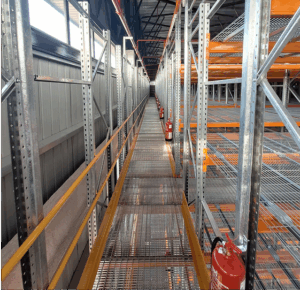
- Mezzanine floor potential many industrial sheds can accommodate a mezzanine level above office or welfare areas, effectively doubling the usable floor area within a modest building footprint. Planning for this at the design stage even if the mezzanine is not built immediately avoids structural complications later.
- Emergency egress and fire safety BOMBA (Malaysia’s Fire and Rescue Department) requirements must be incorporated into the layout from the outset, including travel distances to fire exits, fire compartment boundaries, and sprinkler system coverage.
In the broader sphere of factory design in Malaysia, experienced architectural consultants will typically run through a layout optimisation exercise as part of the design process, stress-testing the proposed arrangement against multiple operational scenarios before finalising the drawings.
Sustainability and Long-Term Adaptability
The conversation around sustainability in industrial construction has shifted noticeably in Malaysia over the past five years. Rising electricity tariffs, growing ESG reporting obligations among listed companies, and increasing scrutiny from multinational clients have all elevated sustainability from a nice-to-have to a genuine business priority.
For industrial shed design specifically, sustainability considerations tend to fall into three categories:
Energy performance is the most immediately impactful. Industrial sheds are large, energy-hungry buildings, and the biggest single opportunity to reduce energy consumption lies in the building envelope better insulation, smarter daylighting, and improved natural ventilation. Passive design measures, implemented at the planning stage, cost a fraction of what it takes to compensate for them later through mechanical cooling.
Solar PV integration is now standard practice on well-designed Malaysian industrial sheds. The large, unobstructed roof areas common in shed construction make them ideal platforms for solar generation. A modest 10,000 sq ft roof can support a system capable of generating 150 to 200 kWp enough to offset a substantial share of a light manufacturing facility’s electricity consumption.
Structural adaptability is a sustainability consideration in its own right. A shed that can be repurposed or extended as business needs change is more sustainable than one that becomes obsolete and is demolished. Designing with modular structural bays, oversized foundations where the budget allows, and flexible utility distribution systems extends the useful life of the building significantly.
Water management in Malaysia’s high-rainfall environment deserves specific attention. Rainwater harvesting from large shed roofs can supply process water, toilet flushing, or landscape irrigation. Proper surface drainage design prevents flooding a common problem on impermeable industrial sites and helps facilities meet Department of Environment requirements.
Conclusion
Industrial shed design is never just about the structure. It is about understanding how a building can actively support the business it houses today and well into the future. From selecting the right structural system and envelope performance specification to planning internal layouts that support efficient operations and comply with Malaysian regulations, every decision in the design process has operational and financial consequences.
The businesses that invest properly in the design stage whether through a full architectural consultancy engagement or an integrated design and build delivery route consistently achieve better outcomes than those that treat a shed as a commodity product. The upfront cost of good design is small relative to the lifetime value it creates.
If you are at the early stages of an industrial shed project in Malaysia, two resources are worth bookmarking. First, our detailed breakdown of how industrial design and build projects are structured and delivered will help you understand the full scope of what is involved. Second, if you are considering engaging a professional design team, our architectural consultancy page explains how that process works and what you can expect.
We are here to help you build something that works not just something that stands.


Read More Blogs