The Real Secret Behind Timeless Luxury Home Design

Some homes age like fine furniture, they grow more beautiful, more characterful, and more valuable with every passing decade. Others feel dated within five years of completion, their finishes tired, their layouts out of step with how life has evolved. The difference between the two rarely comes down to budget alone. It comes down to principles.
Timeless home design is not about chasing trends or spending extravagantly on the most expensive materials available. It is about understanding the fundamentals of proportion, material integrity, spatial logic, and the relationship between a home and its occupants and applying them with discipline and conviction. These are the same principles that define the finest luxury home architecture, and they are more accessible than most homeowners realise.
In Malaysia, where the residential construction market continues to grow rapidly particularly in the landed housing segment, the gap between homes that endure and homes that date quickly is increasingly apparent. If you are planning a new build or a significant renovation, understanding these principles before you engage your architect or designer could be one of the most valuable investments you make.
This article walks through the key design principles that produce truly enduring homes. For inspiration grounded in real Malaysian residential architecture, begin by exploring these thoughtfully designed double storey home concepts.
1. Proportion and Scale in Home Design
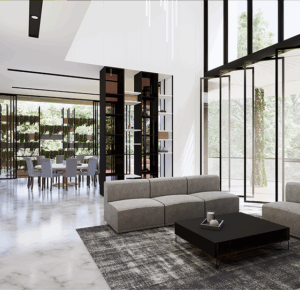
Walk into a home that feels effortlessly right where every room seems to breathe, where ceilings feel generous without being overwhelming, where doorways and windows appear to belong exactly where they are and you are experiencing the work of proportion. It is the most invisible principle in architecture and arguably the most powerful.
Proportion refers to the relationship between the dimensions of different elements: ceiling height to room width, window size to wall area, the width of a corridor relative to its length. When these relationships are considered carefully, the result is a home that feels harmonious in a way that is difficult to articulate but immediately apparent.
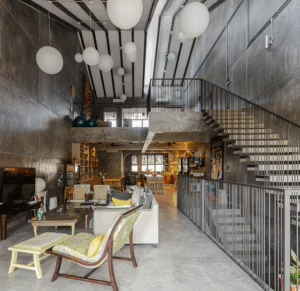
For a double storey house design, proportion is particularly consequential. The relationship between the ground floor ceiling height and the upper floor, the visual weight of the facade relative to the plot width, the scale of the staircase relative to the entrance hall each of these decisions compounds to create an overall impression of quality and coherence.
Practical principles to guide proportion in residential architecture:
- Ceiling heights of at least 3 metres on the ground floor create a sense of generosity that reads as quality even in relatively modest spaces
- Window-to-wall ratios of 30–40% on principal elevations typically produce facades that feel balanced and well-considered
- Consistent module sizes across the structural grid simplify construction and create a visual rhythm that reads as intentional
- Staircases proportioned for comfort, not just code compliance a generous tread depth and comfortable riser height elevates every daily interaction with the home
2. Material Integrity for Long-Lasting Homes
The second principle that separates enduring homes from ephemeral ones is the honest use of materials. In the finest examples of luxury home architecture globally and in Malaysia’s best residential projects materials are chosen for what they genuinely are, not for what they imitate.
This principle has both a practical and an aesthetic dimension. Practically, materials that are honest about their nature tend to perform better over time. Solid timber expands and contracts predictably and can be refinished. Natural stone weathers gracefully. Exposed concrete develops a patina that deepens with age. Their imitations of timber-look vinyl, stone-effect tiles, concrete-finish paint often fare less well, their artifice becoming apparent as they age in ways their real counterparts do not.
Aesthetically, material integrity produces homes that feel grounded and authentic. There is a quality of conviction to a home built from real materials that no imitation can replicate.
For house design in Malaysia, where the climate is demanding high humidity, intense UV exposure, and frequent heavy rainfall material selection carries additional weight. The most enduring choices tend to be:
- Locally sourced hardwoods such as Chengal, Cengal, and Merbau for external joinery, decking, and feature elements species selected specifically for their durability in tropical conditions
- Porcelain and natural stone for exterior and interior floors, chosen for their thermal mass and ease of maintenance
- Cement render and masonry for external walls rather than cladding systems that can trap moisture in the Malaysian humidity
- Powder-coated aluminium or stainless steel for external metalwork materials that perform honestly in the coastal and tropical environment rather than requiring constant maintenance
3. Spatial Logic for Better Living Experience
A beautiful home that does not function well for the people inside it is not, in any meaningful sense, a successful piece of architecture. The third principle of timeless design is spatial logic, the art of organising a home so that it supports daily life intuitively, efficiently, and gracefully.
This is where architecture house design moves from the two-dimensional plan to the lived experience of space. Good spatial logic means that the sequence of rooms makes intuitive sense, that circulation paths are clear and generous, that the relationship between private and social spaces is correctly calibrated for the household’s lifestyle.
For a double storey house design in Malaysia, spatial logic typically involves:
- A clearly defined entry sequence that transitions visitors from the street to the interior with a sense of arrival not a door that opens directly into the living room
- Social spaces on the ground floor living, dining, kitchen arranged to allow family members to be together comfortably while engaged in different activities
- Private spaces on the upper floor bedrooms, study, family lounge separated from guest access while remaining connected to the household
- Service areas laundry, dry yard, storage planned as genuine parts of the design rather than afterthoughts
- A family hall or upper landing that creates a transitional gathering space between the bedrooms, giving the upper floor a social heart
Explore how experienced architects approach this spatial balance in residential architecture designed for Malaysian family living.
4. Climate Responsive Architecture in Malaysia
In a country where the sun is intense, the rainfall is heavy, and the humidity is relentless, a home that ignores its climate is a home that will always be uncomfortable, expensive to run, or both. Climate responsiveness is not a luxury feature in Malaysian architecture, it is a baseline condition for good design.
And yet, it is frequently overlooked in the pursuit of visual impact. Homes with west-facing glass walls that become greenhouses in the afternoon. Flat roofs without adequate drainage that leak after the first monsoon season. Open-plan living areas that trap heat without cross-ventilation. These are failures of climate responsiveness that no amount of interior styling can remedy.
The principles of climate-responsive architecture house design in Malaysia include:
- Building orientation planned to minimise direct western sun exposure on habitable rooms while maximising southern and northern light, which is gentler and more consistent
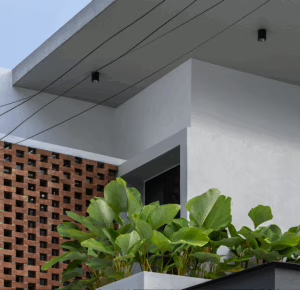
- Deep overhangs and cantilevered roofs that shade external walls and openings from the high tropical sun while still allowing airflow
- Cross-ventilation corridors designed into the plan so that prevailing breezes move through the home naturally, reducing dependence on air conditioning
- Roof design that manages heavy tropical rainfall effectively adequate pitch, proper drainage, and generous eaves that protect walls from water ingress
- Thermal mass in floors and walls that absorbs daytime heat and releases it slowly, moderating interior temperature swings
These are the same strategies that define excellent luxury home architecture in Southeast Asia from the landed estates of Kuala Lumpur’s Golden Triangle to the hillside villas of Penang. Climate responsiveness is not an add-on to good design; it is integral to it.
5. Detail and Craft in Luxury Home Architecture
The final principle that elevates a home from merely well-designed to genuinely timeless is attention to detail. Detail is where the intentions of a design become real where the quality of thinking shows itself not in grand gestures but in the precise resolution of every junction, every transition, every material meeting.
Great detailing is often invisible. You do not notice that the skirting board profile perfectly complements the door architrave, or that the shadow gap between the wall panel and the ceiling has been maintained at exactly 12mm throughout, or that the joinery handles are set at a height that is ergonomically precise. You simply feel that the home has a quality and completeness that is difficult to put your finger on.
Poor detailing, on the other hand, announces itself immediately in gaps that have opened between materials as the building settled, in junctions that were improvised rather than designed, in finishes that feel hasty rather than considered.
For homeowners investing in a significant residential build in Malaysia, the quality of detailing is often the clearest differentiator between a contractor who builds to minimum standard and an architecture practice that brings genuine craft and oversight to the process. Consider:
- Staircase balustrades and handrails resolved as designed elements rather than standard catalogue items
- Kitchen joinery detailed with consistent reveals, shadow gaps, and hardware that has been chosen as part of the overall material palette
- Bathroom tiling laid in a considered pattern and grout colour, with deliberate decisions about where tiles terminate and how transitions are handled
- External landscape designed as a continuation of the architecture, not applied as an afterthought once construction is complete
- Lighting design integrated into the architecture concealed strip lights, recessed downlights, and feature pendants planned from the outset rather than positioned around completed ceilings
Tips to Get Your Home Design Right From the Start
- Engage your architect before your contractor.
The sequence matters enormously. Design decisions made under construction pressure are almost always compromises. - Invest in the brief.
The more clearly you can articulate how you live, what you value, and what a successful outcome looks like, the more effectively your design team can serve you. - Protect the design budget.
Fees paid for excellent architecture house design are invariably recovered in construction efficiency, reduced maintenance costs, and long-term property value. - Visit completed projects.
Ask your architect to show you homes they have built, not just rendered. Walk through them. Sit in them. Open the doors and windows. Quality reveals itself in use, not in images. - Think in decades, not years.
Every material choice, every spatial decision, every detail resolution should be evaluated against how it will perform in twenty years, not just how it looks today.
Conclusion
Timeless homes are not accidents. They are the result of disciplined thinking applied consistently across every scale of the design from the orientation of the building on its plot to the profile of a skirting board in a guest bedroom. Proportion, material integrity, spatial logic, climate responsiveness, and craft are not exclusive to luxury home architecture, they are available to any homeowner willing to invest in the quality of thinking that produces them.
In the Malaysian context, where the residential market offers enormous variety in both scale and budget, these principles matter more than ever. They are what separate homes that appreciate in every sense of the word from those that simply occupy space.
If you are at the beginning of your design journey, start with a clear understanding of what enduring residential architecture looks like in practice. Browse our portfolio of double storey home designs and architectural concepts to see how these principles are applied in completed Malaysian homes.
To discuss how our team can bring these principles to your own project, visit our full range of architectural and design services and let’s create something built to last.


Read More Blogs