Understanding House Facade for Your Malaysian Property
Your home’s house facade is far more than a decorative exterior it’s the architectural face of your property, defining its character, protecting your investment, and communicating your lifestyle to the world. In Malaysia’s tropical climate, where intense sun, high humidity, and heavy rainfall are constant realities, understanding your facade’s purpose becomes essential for maintaining your home’s longevity and curb appeal. Discover how to create a cohesive home front design strategy that transforms your entire exterior presence.
1. What Exactly Is a House Facade?
A house facade is the visible exterior wall of a building, typically the front elevation facing the street. Beyond aesthetics, it serves multiple critical functions:
- Structural protection: Shields interior spaces from weather, UV radiation, and moisture
- Climate control: Manages solar heat gain, wind resistance, and moisture penetration
- Water management: Prevents water infiltration, the leading cause of structural damage in humid climates
- Property value: Homes with well-maintained facades command premium prices in Malaysian real estate markets
A poorly designed facade in Malaysia’s climate can lead to mold growth, structural deterioration, and expensive repairs within just a few years.
2. The Structure and Components of a House Facade
A well-constructed facade consists of multiple interconnected layers working together:
Structural Layer: Reinforced concrete, brick, or timber frame providing structural support. In Malaysian homes, reinforced concrete is most common due to its durability in humid climates.
Waterproofing Layer: Critical in tropical Malaysia, this protective membrane prevents water penetration. Inadequate waterproofing is the number one cause of facade deterioration.
Insulation: Thermal or acoustic insulation that reduces heat transfer and moderates indoor temperatures, significantly reducing air conditioning costs.
Finishing Layer: The visible exterior material: paint, cladding, rendered plaster, stone, tiles, or composite materials.
Functional Elements: Windows, doors, vents, gutters, and drainage systems integrated for light, ventilation, and water management.
3. Types of House Facades in Modern Malaysian Architecture
Modern Minimalist Facades
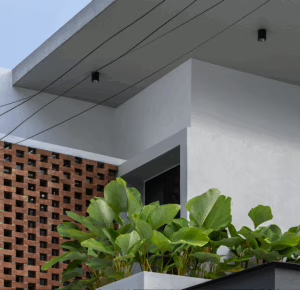
Clean lines, simple geometry, and neutral colors (white, grey, black) define minimalist facades. They create minimal water-trapping crevices, reduce maintenance requirements, and appeal strongly to contemporary Malaysian homebuyers. Common in urban areas like Kuala Lumpur and Petaling Jaya.
Tropical-Inspired Facades
These designs embrace Malaysia’s climate through extended roof overhangs, louver systems for airflow, natural timber materials, and integration of living walls. They create naturally comfortable homes without excessive air conditioning — increasingly popular among environmentally conscious homeowners.
Contemporary Mixed-Material Facades
Combining rendered concrete with natural stone, glass with timber, or perforated metal panels over solid structures creates visual sophistication while balancing durability and budget constraints.
Traditional Colonial-Influenced Facades
Featuring painted wooden elements, arched entryways, and ornate railings, these facades are historically significant but demand higher maintenance in Malaysia’s climate. Explore professional strategies for facade design that balance aesthetics with practicality.
Double-Skin or Ventilated Facades
An outer protective layer separated from the structural wall by an air gap allows continuous air circulation, preventing heat and moisture buildup. More expensive initially, but offering superior performance in tropical climates and becoming standard in premium Malaysian residential developments.
4. Materials and Finishes: Choosing the Right House Facade System
Material selection is one of the most consequential decisions affecting your facade’s durability, maintenance requirements, and cost.
- Rendered Concrete: Most affordable and common in Malaysia. Requires repainting every 5–7 years. Poor-quality render can crack and trap moisture.
- Ceramic and Porcelain Tiles: Exceptional durability and low maintenance. Higher upfront cost and complex installation, but extremely popular in Malaysian residential architecture.
- Natural Stone: Granite, limestone, or sandstone creates sophisticated, long-lasting facades. Expensive and labor-intensive, requiring periodic sealing.
- Wood and Timber: Warm and organic, but requires regular maintenance and is susceptible to rot and termites in Malaysia’s humid climate.
- Composite Panels: Excellent durability in tropical climates with minimal maintenance. Moderate cost with a contemporary finish.
- Glass: Creates striking contemporary facades but requires high-quality low-emissivity glass to manage heat gain and regular cleaning.
Material Performance Comparison for Malaysian Climate:
| Material | Durability | Maintenance | Cost | Aesthetics |
|---|---|---|---|---|
| Rendered Concrete | Moderate | High | Low | Basic |
| Ceramic Tiles | Excellent | Low | High | Excellent |
| Natural Stone | Excellent | Moderate | Very High | Premium |
| Wood/Timber | Moderate | Very High | High | Premium |
| Composite Panels | Excellent | Low | Moderate | Good |
| Glass/Transparent | Excellent | High | High | Contemporary |
5. Facade Maintenance and When to Renovate
A house facade is not a one-time installation it requires ongoing care to maintain value and functionality.
Key maintenance tasks include annual inspections for cracks and failed sealants, cleaning mold and organic growth, refreshing caulking every 3–5 years, keeping drainage systems clear, and repainting rendered finishes every 5–7 years.
Consider a facade renovation when materials are failing, water infiltration indicates systemic issues, energy efficiency improvements are desired, or you are planning to sell and want maximum curb appeal. Facade renovation typically represents 15–25% of total property renovation costs but delivers outsized returns in improved property value and long-term structural protection.
6. Creating Cohesion with Home Front Design
Your house facade is part of a larger home front design ecosystem that includes landscaping, entry features, gates, and lighting. The most successful homes integrate all these elements through material continuity, color harmony, style alignment, and lighting integration.
Homes that excel in Malaysian property markets demonstrate this level of thoughtful integration the facade functions as the visual centerpiece of a coordinated home presentation rather than an isolated exterior layer.
Conclusion
A house facade is a complex system integrating structure, material performance, environmental protection, and aesthetic expression. In Malaysia’s demanding tropical climate, the right material selection, proper waterproofing, and thoughtful design can mean the difference between a home that weathers beautifully for decades and one that deteriorates rapidly and expensively.
Ready to evaluate or improve your home’s facade? Learn how to develop a comprehensive home front design strategy that includes professional facade planning, material selection, and integration with all exterior elements. Your home’s facade deserves thoughtful consideration it’s the frame for your entire property’s story.
Read More Blogs