Popular Residential Interior Design Ideas in Malaysia
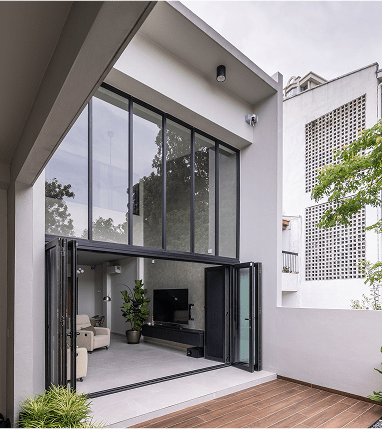
Walk into ten different Malaysian homes and you might encounter ten completely different worlds, a sleek minimalist haven in Mont Kiara, a richly layered Peranakan-inspired terrace in Penang, a biophilic sanctuary in Cyberjaya where greenery creeps along every wall. Interior design in Malaysia has never been more diverse, more ambitious, or more personal than it is in 2026.
Yet for many homeowners, that diversity is also the problem. With so many directions to choose from and so much conflicting advice online, deciding on an interior style that is both beautiful and liveable can feel overwhelming. This guide cuts through the noise. Whether you are furnishing a new double storey home, renovating an older semi-D, or simply exploring possibilities, this curated list of the top residential interior design styles will help you find a direction that genuinely fits your life.
For homeowners currently planning their build, it helps to consider interior and exterior design together from the start see how architecture sets the tone with these double storey home design concepts and layouts.
1. Minimalist Modern Interior Design
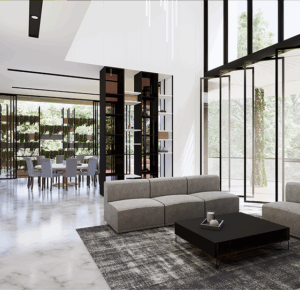
It is not hard to understand why minimalist modern interiors continue to dominate new homes across the Klang Valley, Johor Bahru, and Penang. Clean surfaces, neutral palettes, and a deliberate absence of clutter offer something that feels genuinely restful in a country where urban life moves fast.
In practice, this style leans heavily on:
- White, off-white, and greige walls that bounce natural light through the space
- Recessed lighting and concealed cabinetry that maintain clean sightlines
- Furniture with slim profiles, low-slung sofas, handleless kitchen cabinetry, floating vanities
- Selective use of one warm material typically timber flooring or a stone feature wall to prevent the space from feeling cold
The pitfall many Malaysian homeowners encounter is confusing minimalism with emptiness. Done well, a minimalist interior is carefully curated and every object earns its place. Done poorly, it simply looks bare and unfinished. The key is quality over quantity: one beautifully crafted dining table beats four pieces of mediocre furniture every time.
2. Japandi Style for Malaysian Homes
Japandi has moved from trend to enduring design language, and it translates particularly well to Malaysian homes. The style fuses Japanese wabi-sabi philosophy, the acceptance of imperfection and transience with Scandinavian hygge sensibility, creating interiors that feel both disciplined and deeply warm.
For a double storey house design, Japandi works beautifully when applied consistently across both floors, creating a sense of visual continuity:
- Natural timber in warm honey or ash tones for flooring, cabinetry, and furniture
- Neutral linen, cotton, and wool textiles layered to add tactile depth without visual noise
- Handmade ceramics, woven baskets, and rattan accents as decorative objects
- Sliding or shoji-inspired panel doors to divide spaces with elegance
- A restrained plant selection, a single fiddle-leaf fig, a cluster of pampas grass rather than an indoor jungle
What makes Japandi particularly relevant to house design in Malaysia is its inherent respect for natural materials and craft. In a country with rich timber traditions and skilled artisans, there is a real opportunity to localise this style beautifully incorporating locally sourced Meranti or Nyatoh timber, handmade local ceramics, and rattan furniture crafted by Malaysian makers.
3. Tropical Contemporary Interior Design
If there is one interior style that was practically invented for this country, it is tropical contemporary. Rather than importing a foreign aesthetic wholesale, this approach begins with the reality of Malaysians living the heat, the humidity, the lush greenery just outside the window and builds an interior language from that foundation.
Tropical contemporary interiors are characterised by:
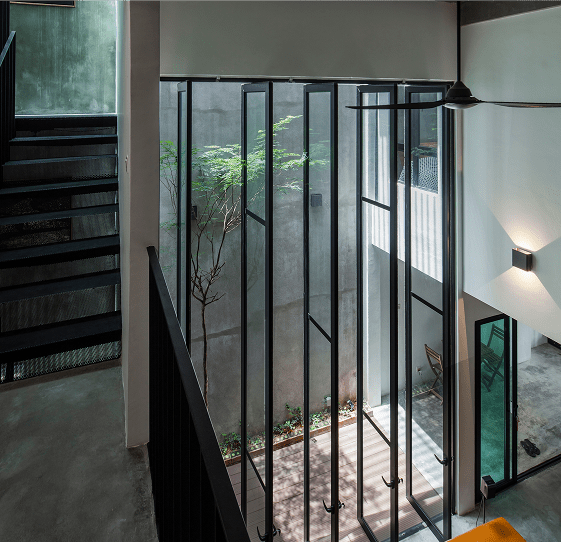
- Indoor-outdoor connectivity folding glass walls, open courtyards, and covered terraces that blur the boundary between inside and outside
- Natural ventilation strategies built into the layout, reducing reliance on air conditioning
- Stone, terrazzo, and polished concrete floors that stay cool underfoot
- High ceilings with exposed timber or steel trusses that allow hot air to rise
- Abundant greenery statement planters, vertical gardens, and planting beds integrated into the architecture itself
This style pairs exceptionally well with thoughtful architecture house design, where the structure is conceived to maximise natural light, airflow, and the visual connection to the landscape. When your interior designer and architect are working from the same brief, creating a home that responds intelligently to its tropical setting, the results can be extraordinary.
Explore how this integration plays out at the structural level by looking at how Malaysian architects approach residential architecture and spatial planning.
4. Industrial Chic for Urban Malaysian Homes
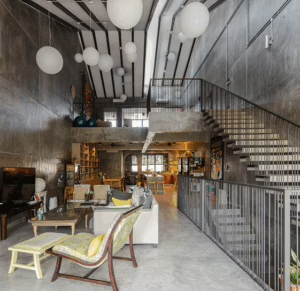
Industrial design has found a strong following among younger Malaysian homeowners, particularly in urban condominiums and converted shophouse residences. It takes its cues from repurposed factory lofts, exposed brick, raw concrete, steel-framed windows, and Edison bulb pendant lights but refines those elements into something genuinely liveable.
Key features of well-executed industrial interiors include:
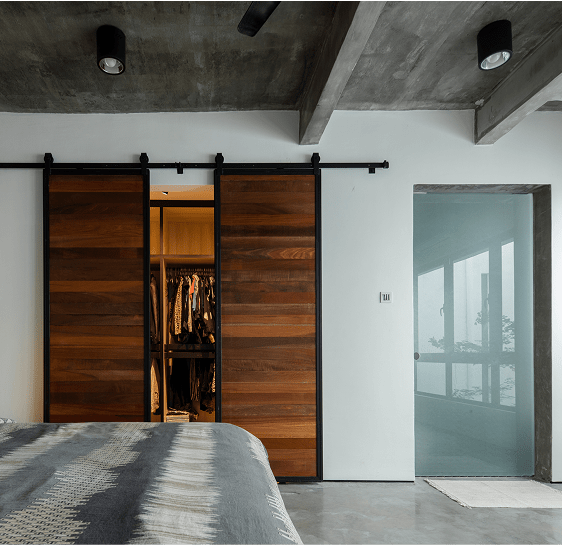
- Exposed concrete ceilings or walls left raw or limewashed for a softer finish
- Black-framed steel windows and partitions that add architectural edge
- Reclaimed timber for dining tables, shelving, and accent walls
- Leather, canvas, and linen upholstery in deep tones charcoal, cognac, forest green
- Statement pendant lighting in brushed brass or matte black
The risk with industrial interiors in Malaysia is thermal comfort. Raw concrete and metal absorb and radiate heat, which can make spaces uncomfortable without adequate air conditioning or cross-ventilation. Skilled designers mitigate this through careful material selection opting for finishes that look industrial without the thermal performance of the real thing.
5. Muji-Inspired Functional Simplicity
The Muji aesthetic, named after the beloved Japanese lifestyle brand, has taken firm root in Malaysian interior design circles. It is a close cousin of minimalism, but with a stronger emphasis on functional organisation, storage systems, and the quiet pleasure of a well-ordered home.
In practical terms, this style prioritises:
- Modular storage solutions that keep everyday clutter contained and accessible
- Neutral, muted colour palettes cream, taupe, stone, and natural wood tones
- Multipurpose furniture ottomans with storage, extendable dining tables, murphy beds for guest rooms
- A curated library or reading corner as a focal point
- Zero visual noise cables hidden, appliances concealed, surfaces clear
For families in Malaysia navigating the reality of multi-generational living where grandparents, parents, and children share a double storey home, the Muji approach to functional organisation can genuinely transform daily life. Dedicated zones for every activity, smart storage at every turn, and a visual calm that makes the whole household feel more at ease.
6. Contemporary Malay Heritage Design
One of the most exciting directions in residential interior design today is the thoughtful reinterpretation of Malay heritage aesthetics for contemporary homes. Rather than reproducing traditional kampung elements literally, this approach distills their essence, craftsmanship, natural materials, geometric batik patterns, and a deep connection to the natural world into an interior language that feels both culturally rooted and entirely modern.
Signature elements include:
- Songket and batik textiles used as cushion covers, wall hangings, or statement upholstery
- Carved timber screens reinterpreted as room dividers or staircase balustrades
- Terracotta, deep green, and warm gold as accent colours drawn from traditional Malay craft
- Hand-thrown local pottery and woven mengkuang accessories as decorative objects
- Teak and Cengal timber for flooring and structural joinery
This style has particular resonance in landed properties, bungalows, semi-detached homes, and double storey terraces where the scale and spatial generosity allow heritage elements to breathe. It is also a style that ages beautifully, becoming richer and more characterful with time.
7. Biophilic Residential Interior Design
Biophilic design is no longer a niche concept, it has become a mainstream priority for Malaysian homeowners who have come to understand the measurable impact of nature on mental health, stress levels, and overall wellbeing. In essence, biophilic interiors are designed to strengthen the occupant’s connection to the natural world, even within an urban home.
This goes well beyond putting a few plants on a shelf. Truly biophilic residential interior design encompasses:
- Natural materials throughout timber, stone, cane, linen, wool, leather
- Living walls and internal planting beds integrated into the architecture
- Water features indoor fountains, reflecting pools visible from living areas
- Maximised natural light through skylights, light wells, and large glazed openings
- Views to greenery even in urban settings, careful landscaping of balconies and courtyards creates the visual experience of nature
In Malaysia, where the climate supports year-round plant growth and biodiversity is extraordinary, biophilic design has a richness of raw material that homeowners in cooler climates can only dream of. The challenge is managing the relationship between lush indoor planting and humidity control, something a knowledgeable interior designer can navigate with the right plant selection and ventilation strategy.
8. Eclectic Layered Interior Style
Not every homeowner wants a home that belongs to a recognisable style. Eclectic interiors when done with confidence and a good eye can be among the most compelling and personal spaces of all. The key word is curated. Eclectic does not mean random; it means deliberately chosen objects, textures, and references that reflect a singular point of view.
In Malaysian homes, this often manifests as a blend of:
- Vintage Malaysian furniture, rattan loungers, Peranakan tiles, colonial teak sideboards, alongside contemporary pieces
- Art collected over time, displayed generously and without rigid symmetry
- A rich, layered colour palette that evolves from room to room
- Travel souvenirs and craft objects that carry personal meaning
- An absence of decorating rules and the confidence to trust instinct
The risk of eclecticism without discipline is visual chaos. The golden rule: maintain consistency in one element whether that is colour temperature, material tone, or scale to create a thread of coherence that ties the space together.
9. Luxury Transitional
Transitional design occupies the middle ground between traditional and contemporary, borrowing the warmth and formality of classic interiors while incorporating the clean lines and restrained palette of modern design. In its luxury expression, this style is particularly popular for high-end landed properties and bungalows in areas like Damansara Heights, Kenny Hills, and Taman Tun Dr Ismail.
Defining features include:
- Marble or engineered stone surfaces in kitchen islands, feature walls, and bathroom floors
- Upholstered sofas with tailored lines neither boxy nor overly traditional
- Layered window treatments sheer inner curtains with heavier fabric outer drapes
- Brass, gold, or brushed nickel hardware as a unifying finish throughout
- Statement lighting chandeliers that are architectural rather than ornate
This is a style with real longevity. Unlike trend-driven interiors that feel dated within a decade, a well-executed transitional interior simply deepens in character over time.
10. Smart Home Integrated Design
In 2026, no list of top interior design styles would be complete without acknowledging the growing integration of smart home technology into Malaysian residential design. This is less a visual style than a design philosophy one that holds that a beautiful home should also be an intelligent one.
Smart home integration at the interior design level involves:
- Concealed wiring and control systems that keep walls and surfaces clean
- Integrated motorised blinds and curtains controlled by voice or app
- Lighting scenes programmable by room and time of day
- Built-in speaker systems flush with ceilings or walls
- Kitchen and bathroom fixtures with touchless or sensor-activated controls
The best smart home interiors are invisible in their intelligence, the technology serves the occupant without announcing itself. This requires close collaboration between the interior designer, the architect, and the M&E contractor from the very earliest stages of the project. Retrofitting smart systems into a completed home is possible but always more expensive and disruptive than designing for them from the outset.
Conclusion
The ten styles explored in this guide represent the breadth and ambition of residential interior design in Malaysia today. From the disciplined calm of minimalist modern to the cultural richness of contemporary Malay heritage, from the technology-forward intelligence of smart home design to the deeply personal layering of an eclectic interior each offers a distinct vision of what home can mean.
What unites the best examples of each style is not the aesthetic itself, but the quality of thinking behind it: an interior that has been genuinely conceived around the people who will live in it, the climate it sits within, and the architecture that frames it.
For those in the process of designing or building a landed home, interior design decisions are most powerful when made in dialogue with the architecture from the start. Browse thoughtfully designed residential architecture by our team to understand how structure and interior vision can work in complete harmony.
Ready to bring your vision to life? View our completed residential projects and reach out to our team when you are ready to begin.

Read More Blogs